Giving up is not an option.
Experiencing a setback does not define us as failures, and not having clear goals is not necessarily a bad thing. Sometimes being stuck can be positive, because that is where transformation begins. Most importantly, despite obstacles, you persevered—you did not give up, and you gave your best. These are my words of motivation to remind myself that beginnings are always difficult and that I need to see my weaknesses as opportunities for growth. This semester, specifically in the Composition and Individual Society class, I can say that I started with a very different mindset than the one I finished with.
At the beginning, I did not have a clear goal that I wanted to achieve through this learning experience. This unconscious lack of direction meant that I did not have strong motivation, and it also prevented me from developing interests beyond simply earning the required credits. As a result, it was difficult for me to immediately identify my mistakes and the areas where I needed improvement. When you have a goal, motivation follows. At that time, my only thought was that my major was communication, so I assumed this class would mainly help me refine my vocabulary.
Throughout the process, I began to evaluate my situation and realized that I needed to improve. I noticed that my high school classes were entirely lecture-based, with everything written on the board, which I found challenging. I had to learn how to adapt to this new academic format and develop strategies to better understand the material and support my learning. I also realized that I needed to improve my language skills, as my level was lower due to coming from an international high school with a curriculum very different from that of a bilingual high school. My grammar was not strong, and at times I struggled to understand instructions, which negatively affected my assignments.
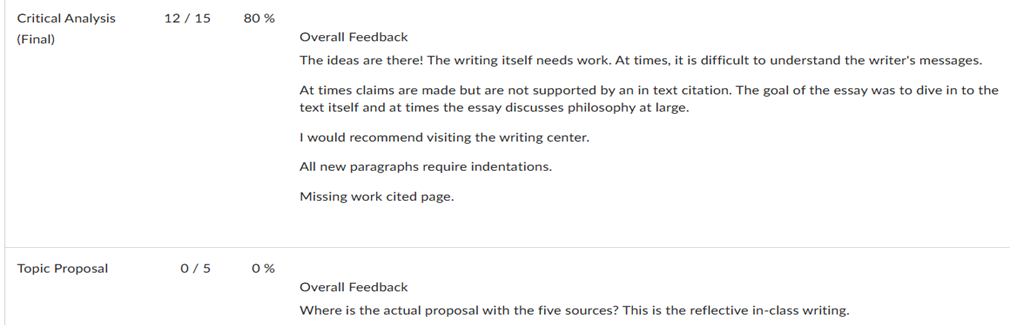
According to the feedback I received in my FIQWS 10108 HA14 – Composition of Individual & Society class taught by Professor Jacobson, my ideas were well presented, but my writing needed improvement. This feedback allowed me to analyze my work more critically and identify my weaknesses, such as my writing style and the need to strengthen my use of citations. At the same time, I recognized my strengths, particularly my ability to express ideas clearly.
Because of this realization, I began focusing on improving my skills and acquiring new knowledge. I would like to highlight four skills that I continue to work on developing throughout this semester:
1-Making the most of support tools for my learning: This skill is based on the fact that, as I explained earlier in this essay, my English skills are still developing, and I often found it difficult to fully understand the professor’s instructions. Therefore, the support tool I relied on this semester to participate in class and understand what was happening was Microsoft Word’s Transcribe feature. This involved activating the computer’s microphone and transcribing the entire class discussion.
Using this tool allowed me to listen to the lecture while reading the content at the same time, which significantly improved my learning. My ear is not yet accustomed to certain English pronunciations, so seeing the words written helped me interpret how they are pronounced correctly and expand my vocabulary. And also, I could translate the transcribed text into my native language, Spanish, or take it to a tutor who could help explain the main ideas discussed in class.
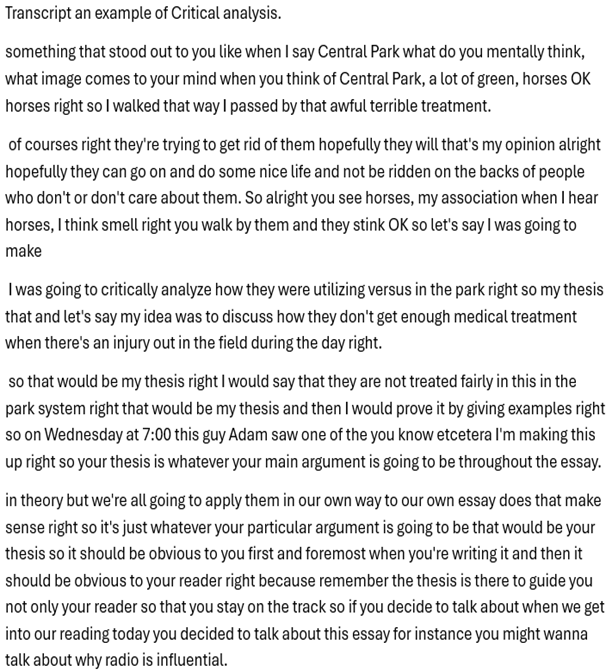
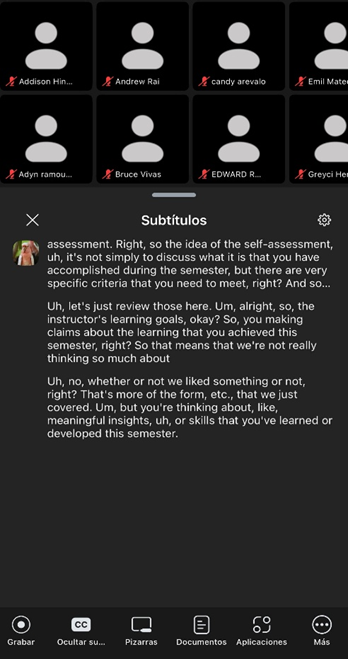
Even when we had meetings via Zoom, I used the transcript to understand what was happening during that time. This helped me a lot in developing, listening, speaking and writing skills.
2- Expressing my ideas clearly and coherently: During this semester, developing my idea was always my priority because it’s through this that the structure of my projects is created, and through these projects that I demonstrate my learning. During class, the teacher always provided us with all the necessary materials to understand the instructions, including examples of completed work. She gave us a brief explanation of the main objectives, as in the first assignment for my first claim in the Critical Analysis transcript, where she gave us a short explanation of how the topic we chose should be based on our interests. From there, arguments emerged, and from those arguments, the thesis developed. However, we also did a lot of peer review and feedback among classmates, and the most efficient way I found to organize my ideas was by creating my own template with a graphic organizer.
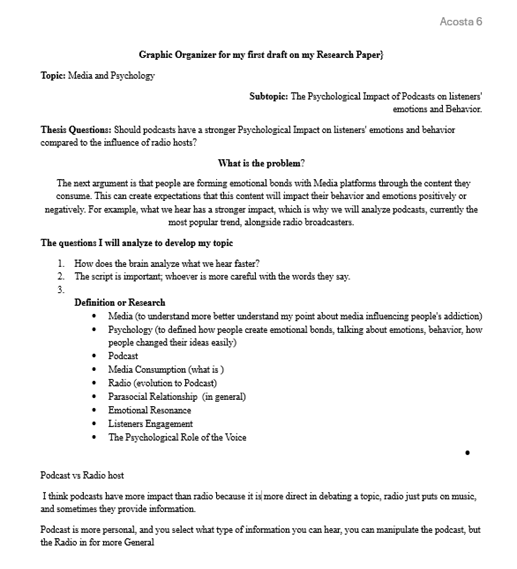
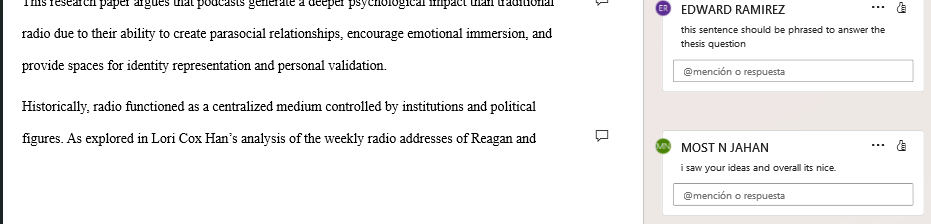
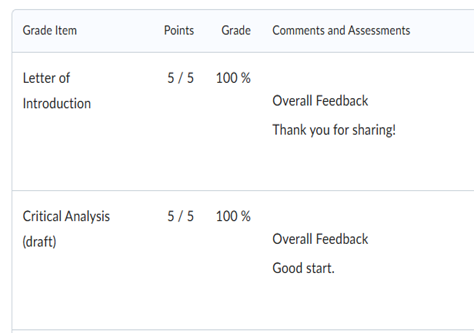
This approach helped my classmates understand my ideas and how I planned to develop my essay during feedback sessions, while also serving a structure and as a guide to track my progress. It helped me explain each term more clearly and showed me that, even if my writing skills are still developing, this method allowed me to organize my ideas more effectively and contributed to improving my grades.
3- Deepening my reading and analytical skills: Reading was never my favorite activity, but through these classes, I found myself genuinely engaged by the topics we explored. Discussions about how media shapes society and how algorithms can influence public opinion—leading people to prefer social media over traditional media—truly captured my attention. I was especially interested in analyzing how to educate the public by drawing on philosophical theories while considering the growing influence of the internet.
Throughout the semester, I completed a class writing assignment that required reading an assigned text during class and writing an analytical interpretation within the final 20 minutes. While I struggled with the time constraints and maintaining strong grammar, my reading skills improved significantly. I began to enjoy writing my interpretations in my notebook, and these readings ultimately inspired my research essay. Through this process, I learned how to use MLA in-text citations and how to navigate Cuny’s library resources to find academic sources. I also gained an essential skill: reading abstracts, which helps me quickly identify a text’s focus and determine its relevance to my research.
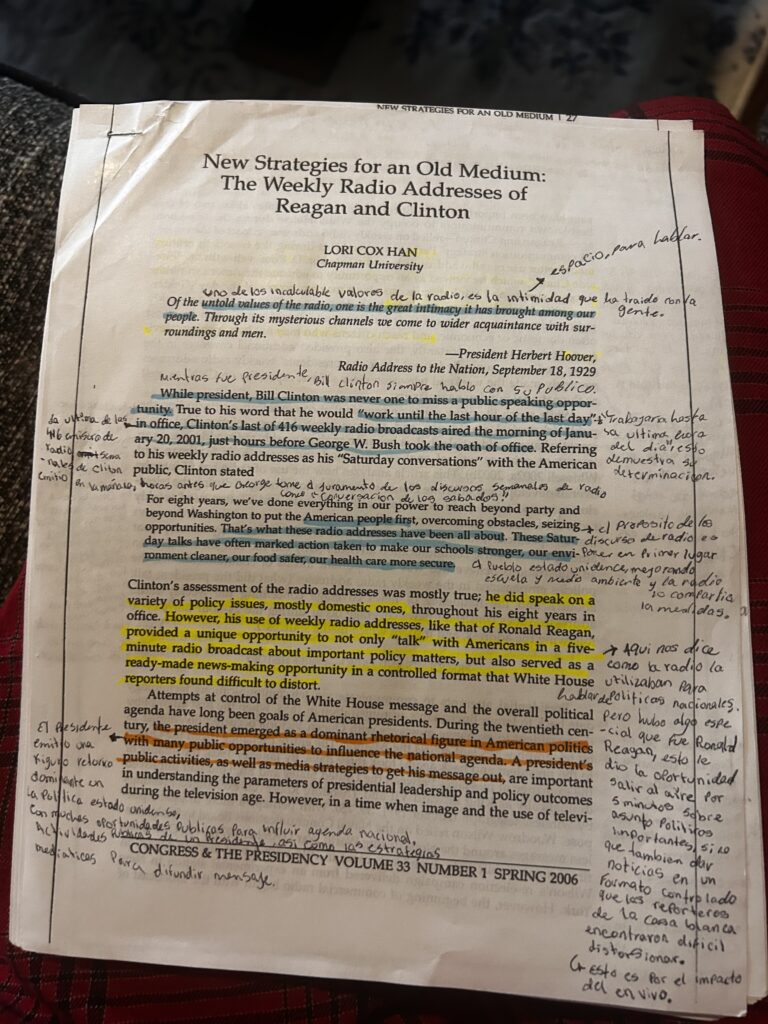
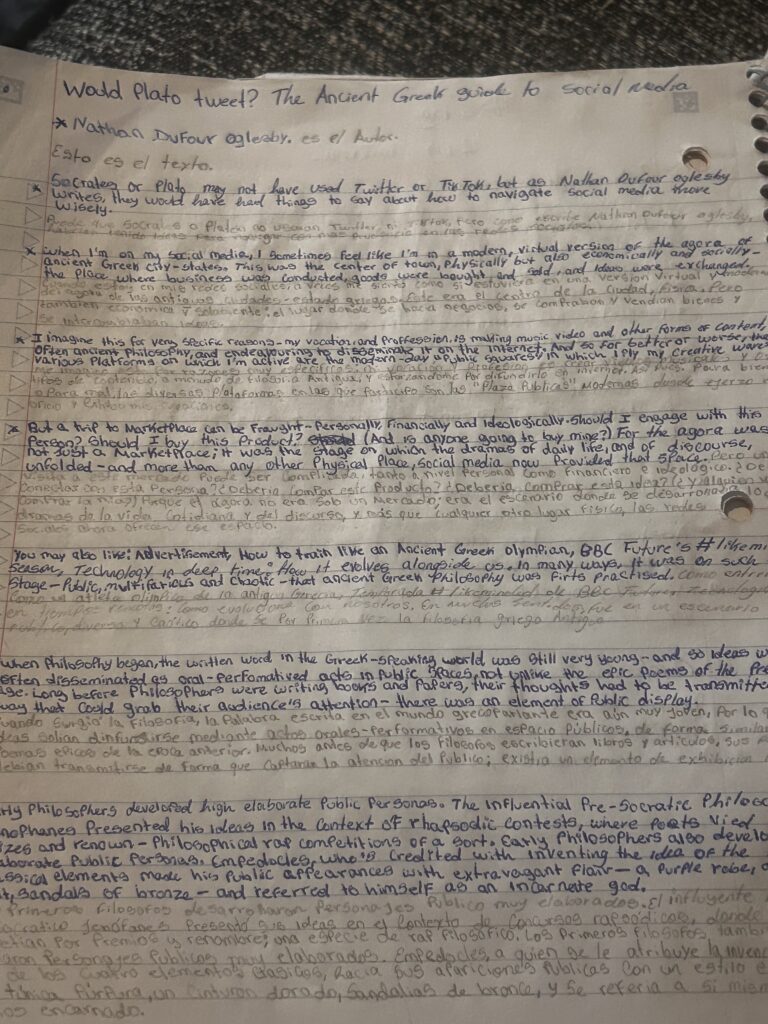
For example, in the article by Han, Lori Cox, “New Strategies for an Old Medium: The Weekly Radio Addresses of Reagan and Clinton,” which I used for my research essay, I carefully noted my ideas and analyses about radio and how it functioned as a strategic tool for advancing political careers. Similarly, in my Topics Proposal, I explained how course readings shaped my understanding of media influence. I wrote: “During the FIQWS class, we analyzed readings such as ‘The Fear of Radio,’ ‘How the Daisy Ad Changed Everything,’ and ‘The Problem with Facts.’ These texts demonstrate how platforms are used to deliver messages that influence audience thinking and behavior.
4-Creating connections between different classes: One of the most valuable aspects of this semester is that the knowledge gained in one class supported my learning in others. For example, when writing essays for different courses, I applied the formatting and structure I learned here. There was a strong connection between FIQWS 10008 HA14 [37820] and FIQWS 10108 HA14 – Composition of Individual & Society, and continuing with the same group of classmates helped me build positive relationships and feel more comfortable participating.
Many readings from FIQWS 10008 helped me better understand the historical context discussed in Composition of Individual & Society. This was especially helpful when completing my Annotated Bibliography, where I connected skills from both classes, such as MLA formatting, using library resources, and analyzing author purpose. In my Critical Analysis Essay, I discussed the theory of the Egyptian king Theuth from Plato’s Phaedrus, exploring the idea that spoken words can be defended while written words cannot—a concept I also examined in Introduction to Media Studies.
In my research essay for Composition of Individual & Society, I analyzed how sound influences emotions, explaining that the brain processes what we hear quickly and that sound can shape our emotional responses. As discussed in a lecture by Professor Gregory Oswald (2025), music, for example, can create calm and relaxation. Overall, connecting these classes allowed me to expand my knowledge and consider multiple perspectives.
In conclusion, these strategies helped me, as a first-year student, adapt to the structure of the university and efficiently improve skills that are essential in any field, such as writing, reading, critical analysis, and speaking fluently. Throughout this process, I was also learning a new language, which allowed me to train my ear and become familiar with new pronunciations. I am proud that I did not give up and that I continued moving forward while adapting to this academic system.
The strategies I developed motivated me to forge my own path and continue improving, supported by experience, the lessons learned, and, above all, the mistakes that helped me understand what I needed to change. I will continue strengthening these skills and learning the language from multiple perspectives: speaking, writing, reading, and interpreting.
Most importantly, I now have clear goals and objectives, and this semester taught me the value of being prepared with a frame of reference, a structure, or a guiding idea that allows learning to truly begin.

